Value pressure
Restaurant research keeps pointing to price sensitivity, convenience and memorable experience as the themes operators must design around.
Source: McKinsey
Business guides
Perth fresh juice bars make sense when they plug into real wellness, post-workout or heat-driven refreshment routines rather than vague healthy-living aspirations. The business works only if enough repeat customers will pay for freshness often enough to cover labour, produce and a premium location.
Overview
A Perth juice bar is a speed-and-frequency business dressed in health language. Morning commuters, gym-goers, shoppers and beach-adjacent customers can all matter, but each catchment buys at different times and for different reasons. Use the simulator to separate juices, smoothies, bowls or add-ons and to test whether the daily repeat habit is strong enough to justify perishable prep work.
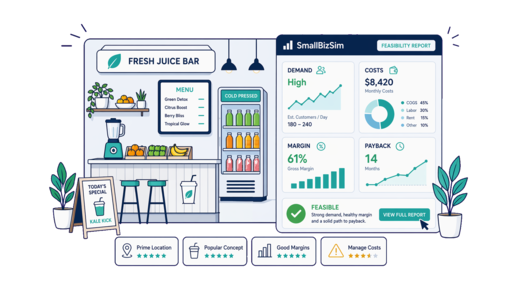
Key stats
Value pressure
Restaurant research keeps pointing to price sensitivity, convenience and memorable experience as the themes operators must design around.
Source: McKinsey
Food safety is not optional
Food businesses need documented food handling, allergen and hygiene processes before launch, not after the first complaint.
Benchmark the margins
Tax-office small-business benchmarks are useful sense checks for food cost, labour and rent assumptions, even though your site still needs its own model.
Source: ATO
Key concepts
A juice bar near gyms, Pilates, beaches or lifestyle retail can work when the drink feels like a natural next step in the customer's routine. A generic high street without that ritual may not provide enough repetition, even if the area seems affluent.
Perth founders should distinguish aspiration from behaviour. Plenty of people like the idea of healthy drinks; fewer buy them several times a week.
Fresh prep can make a juice bar feel premium, but labour and wastage rise quickly when the menu becomes too broad. The launch menu should support fast service and clear ingredient planning.
Use the simulator to test weather-driven peaks separately from the base case. Summer upside is valuable only if the year-round rhythm already makes sense.
Audience and industry
Customers for a fresh juice bar in Perth should be described by routine, not by broad demographics. Identify who buys, when they buy, how often they return, what alternatives they compare, and how far they will travel. For this business, the first demand hypothesis to prove is repeat local demand, visible catchment fit and sustainable booking or transaction volume.
Heat and beach lifestyle help the category, but they do not make every site viable. Coastal precincts may get summer refreshment spikes, while neighbourhood wellness centres, gym clusters and shopping hubs often provide steadier year-round demand.
Competition in Perth is not just the nearest similar operator. Include substitutes, online options, supermarkets, gyms, marketplaces, delivery platforms, shopping centres, petrol sites, home alternatives and any business that solves the same customer problem. Visit competitors at the same times you expect to trade.
Key factors
Proof of repeat local demand, visible catchment fit and sustainable booking or transaction volume in the exact Perth catchment.
Rent, outgoings, lease obligations and fit-out spend compared with conservative sales.
capacity utilisation, staffing coverage, customer experience, stock or equipment control and repeat sales routines
contribution margin after direct costs, labour pressure and occupancy cost
Enough cash to survive delays, learning, seasonality and slower repeat-customer growth.
Finance model
Business Model Canvas
Specific Perth customers with repeat need for repeat local demand, visible catchment fit and sustainable booking or transaction volume.
A fresh juice bar offer that is easier, faster, more trusted or more local than the alternatives.
Street visibility, local search, referrals, social proof, partnerships, delivery or marketplace channels as appropriate.
Sales driven by repeat local demand, visible catchment fit and sustainable booking or transaction volume; test price, volume and repeat rate separately.
rent, wages, supplies, product cost, utilities, insurance and payment fees; split fixed costs, variable costs and launch costs.
capacity utilisation, staffing coverage, customer experience, stock or equipment control and repeat sales routines
A suitable site or channel, trained people, reliable suppliers, systems, permits and enough runway.
Landlord, suppliers, advisers, local marketers, delivery or fulfilment providers, and maintenance support.
Evidence-based assumptions, staged spending, conservative break-even checks and clear exit conditions.
Common mistakes
Treating broad health interest as daily demand
Validate repeat purchase behaviour in the precise catchment instead.
Running too much fresh inventory
Align produce depth to realistic sell-through and a tighter menu.
Depending on summer alone
Make sure the base case works in cooler months and quieter weeks too.
Case studies
A compact scenario showing how one assumption can change the result.
A compact scenario showing how one assumption can change the result.
Decision tree
Move to rent, capacity and margin stress tests.
Keep researching, pre-selling or testing with a smaller commitment.
Review startup risk, funding and compliance with advisers.
Renegotiate rent, reduce scope, change location or pause.
Prepare a launch plan with measured weekly review points.
Fix capacity, staffing, supplier or process constraints before spending more.
Self-evaluation
Early stage: tighten the assumptions before treating this as feasible.
Decision point
Use the simulator as a structured sanity check. It should support adviser conversations, not replace them.
Test your idea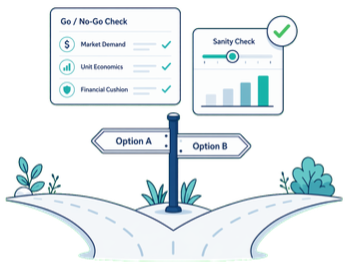
Where you trade
The guide above works as a planning framework. Confirm the rules, taxes and local context below before you commit.

Checklist
FAQ
They tend to work best near strong wellness or refreshment routines: gyms, lifestyle centres, beach corridors, shopping hubs or lunch strips where customers already buy something quick and healthy.
Perth summer and beach weather can lift demand, but the year-round model should still stand up. Treat hot-weather upside as additional, not foundational.
Not necessarily. Juice bars usually need stronger health cues, tighter prep systems and a clearer repeat-wellness occasion. They should be modelled around those differences, not assumed to inherit café behaviour.
No. It is early planning support to help you structure assumptions before seeking qualified advice on finance, tax, lease, employment and compliance matters.
Sources
Disclaimer: smallbizsim.com provides indicative planning estimates only. It is not financial, legal, tax or investment advice. Verify assumptions with qualified advisers before making decisions.