Retention beats hype
Wellness studios depend on recurring visits, instructor trust and a calendar that turns first-timers into habits.
Source: Yoga Alliance
Business guides
A massage business sells relief customers can feel. The economics depend on therapist utilisation, room turnover, credentials, boundaries and whether clients return before pain or stress returns.
Localise this guide
Overview
The model works when trust and outcomes create repeat bookings at prices that pay for skilled labour and quiet rooms. In practical terms, this is the massage shop investment story about local wellness spend, search volume, referral partners, therapist reputation and repeat booking intent, appointment price, therapist cost, room utilisation, packages, add-ons and cancellation policy, and the discipline to avoid building too many rooms before there are therapists and repeat clients to fill them.
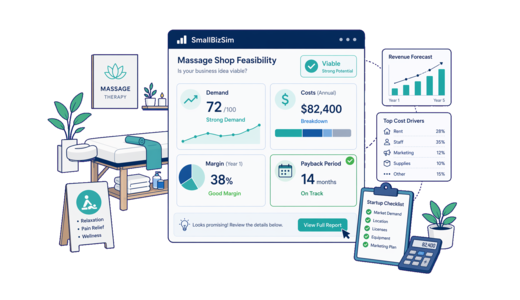
Key stats
Retention beats hype
Wellness studios depend on recurring visits, instructor trust and a calendar that turns first-timers into habits.
Source: Yoga Alliance
Credentials matter
Massage and movement businesses should treat training, scope of practice and insurance as commercial trust signals as well as compliance checks.
Source: AMTA
Wages move break-even
Award rates, contractor settings and penalty rates can materially change the class or appointment volume needed to break even.
Source: Fair Work Ombudsman
Key concepts
Each treatment room has a finite number of bookable hours after cleaning and breaks.
A high hourly price can still fail if rooms sit empty during key periods.
Packages can improve cash flow, but only when redemption patterns are modelled.
Credentials, intake forms, boundaries and hygiene processes should be visible and consistent.
Therapist retention matters because clients often follow people, not premises.
Referral partners can lower marketing cost if service quality is reliable.
Audience and industry
This guide is for founders, buyers and side-hustle operators asking whether the massage shop deserves more time, money and professional due diligence.
Wellness demand is real, but customers choose providers based on trust, referrals and consistent outcomes.
Compare spas, physiotherapy-adjacent clinics, mobile therapists, gyms and wellness studios.
Key factors
local wellness spend, search volume, referral partners, therapist reputation and repeat booking intent
appointment price, therapist cost, room utilisation, packages, add-ons and cancellation policy
treatment rooms, therapist availability, cleaning buffers, booking flow and professional scope of practice
building too many rooms before there are therapists and repeat clients to fill them
a clear therapeutic lane: sports recovery, relaxation, remedial care, pregnancy massage or membership wellness
Finance model
Business Model Canvas
office workers, athletes, stressed locals, wellness clients and people seeking pain relief or recovery routines
a clear therapeutic lane: sports recovery, relaxation, remedial care, pregnancy massage or membership wellness
Volume multiplied by realised price, with add-ons and repeat frequency tested separately.
Direct costs first, then rent, wages, utilities, software, maintenance, marketing and startup capital.
Conservative assumptions, staged spending, local quotes and clear break-even checks before commitment.
Common mistakes
Mistaking opening-week attention for repeat demand.
Separate curiosity traffic from customers who return at sustainable prices.
Letting the lease decide the business model.
Model rent and fixed costs against a conservative demand case before signing.
Ignoring the operating bottleneck.
Check treatment rooms, therapist availability, cleaning buffers, booking flow and professional scope of practice before assuming more sales are physically possible.
Underfunding the ramp-up period.
Keep working capital for delays, training, mistakes, repairs and slower-than-planned demand.
Case studies
A compact scenario showing how one assumption can change the result.
A compact scenario showing how one assumption can change the result.
Decision tree
Move to quote-based costing and capacity stress tests.
Pause spending and collect better local evidence first.
Test whether the upside case is operationally deliverable.
Reduce fixed costs, narrow the offer or find a different site.
Turn that promise into menu, pricing, staffing and marketing decisions.
Sharpen the concept before committing capital.
Self-evaluation
Early stage: tighten the assumptions before treating this as feasible.
Decision point
Use the simulator as a structured sanity check. It should support adviser conversations, not replace them.
Test your idea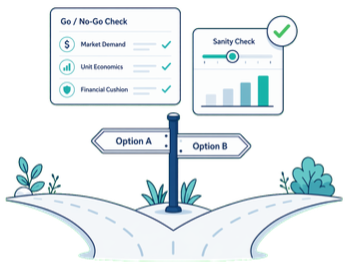
Where you trade
The guide above works as a general planning framework. Pick your country for rules, taxes and local context.

Checklist
FAQ
Start with conservative local evidence for demand, pricing, direct costs, staffing, rent and startup money. The simulator turns those assumptions into revenue, cost, profit, break-even and payback outputs.
No. Calculations are deterministic and based on the assumptions you enter. AI-generated text only explains results and does not recompute them.
No. Use it as an early planning tool and verify assumptions with qualified advisers, quotes and local market evidence.
Sources
Disclaimer: smallbizsim.com provides indicative planning estimates only. It is not financial, legal, tax or investment advice. Verify assumptions with qualified advisers before making decisions.